

When you incorporate circular raw materials into poultry feed, it involves more than just adding a product to the recipe. Residual products from the food industry — such as crisps or brewers’ grains — have very different properties to traditional raw materials like maize or wheat. This makes the production process more complex, but also more innovative. “And that’s precisely the challenge”, says works manager Edgar Bos.
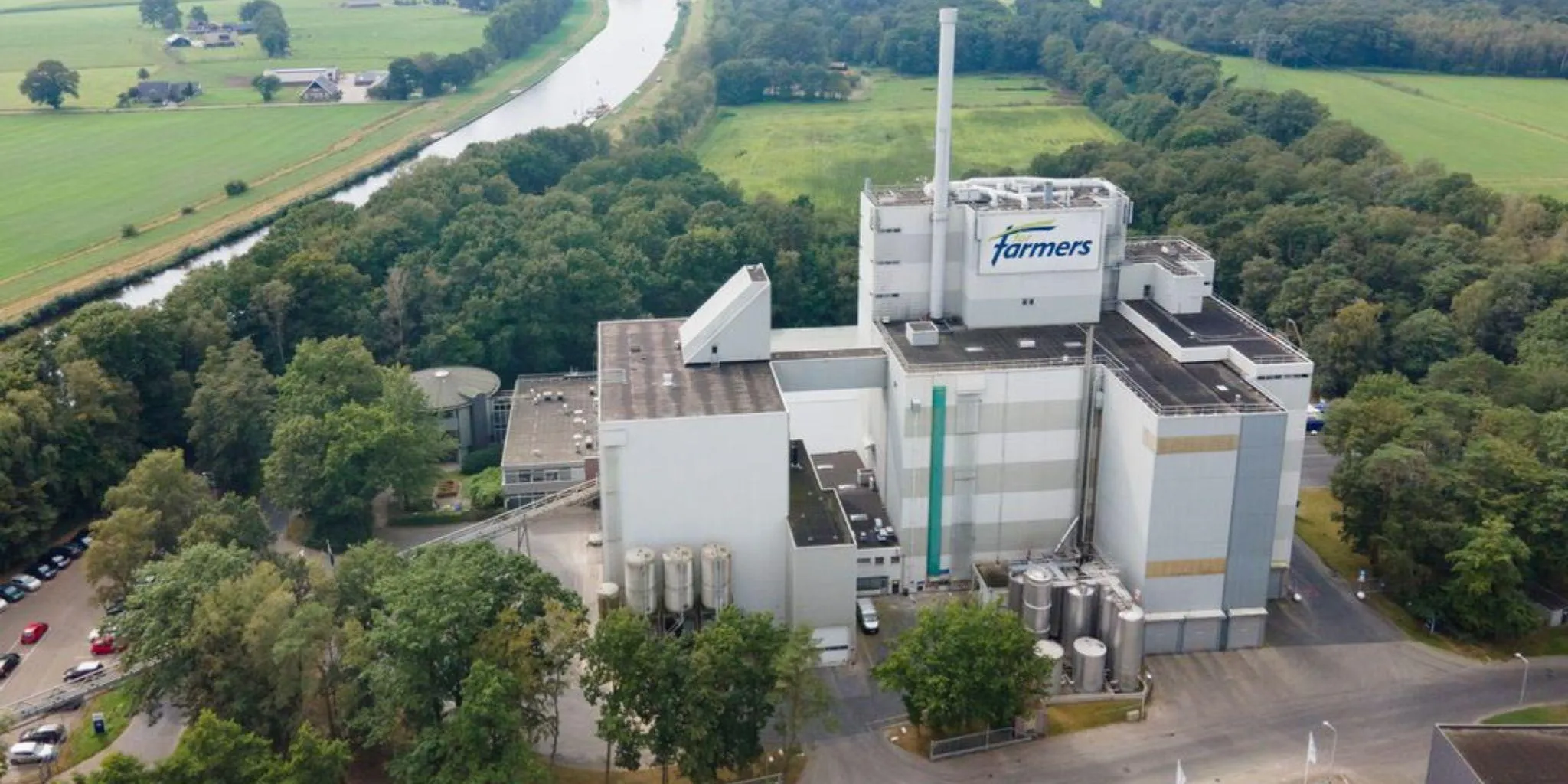
“Every residual product behaves differently in the process”, says Edgar Bos, manager of our site in Delden. “Take crisps, a residual product that we’ve been processing in meat poultry feed since last year. A silo containing crisps empties more slowly than one containing maize because crisps are greasy, lightweight and tend to stick together. We’ve come up with technical solutions for this, such as modified silos and hoppers, so everything flows smoothly.” Delden recently invested in a new pump room and additional raw-material hoppers to meet these challenges.
“For each residual product, we examine what’s technically required to process it properly within our existing production process”, Edgar continues. “This is because the basic process — dosing, grinding, mixing and, if necessary, pressing or crumbling — must continue to run smoothly.”
We also check the quality and nutritional value of residual products with every delivery. We analyse samples for protein, fat, starch and other components. Our Formulation and Nutrition teams use this data to create balanced recipes, enabling us to guarantee tasty, high-quality feed at competitive prices.
Circular products are residual flows from the food industry. These include wet flows, such as brewers’ grains from breweries, and dry flows, such as crisps, chocolate mix and starch residues. Van Triest CirQlar, part of ForFarmers, specialises in the purchase and sale of residual flows. By processing these products, we’re both contributing to a more sustainable chain and utilising valuable nutrients.